
Growing up, a specific beer commercial did not just stick with me. It shaped how I saw the kind of man I wanted to become. That is ironic, considering I never drank that beer a day in my life, and later in life, I had to quit drinking entirely.
It was the classic Dos Equis campaign featuring “The Most Interesting Man in the World.”
His pursuits were so absurdly legendary that he was supposedly the life of parties he never even attended. He cliff-jumped, hiked remote paths alongside indigenous tribes, and swam casually with sharks. That man had a lot of hobbies.
While the ad agency was just trying to sell lager, they tapped into an undeniable truth: having the right hobbies changes how people see you.
Table of Contents
I have always dabbled in different hobbies. Recently, I picked up painting, chess, and journaling. Whenever I tackle any of those out in public, they act as an instant icebreaker. Small talk stops running on autopilot. When somebody hits you with the inevitable, mind-numbing “So, what do you do?” question, you do not have to regurgitate your job title. You can look them in the eye and say, “Right now, I am trying to figure out how not to get destroyed in twenty moves on a chessboard.”
A great pursuit gives you real stories to share across a table. A man dedicated to his craft commands the kind of quiet presence you usually get from a razor-sharp haircut and a perfect pair of raw denim.
Beyond looking cool at a social gathering, the psychological benefits run deep. Studies on adult relationships consistently show that having an independent, engaging hobbies gives a person their own social circle, distinct identity, and fresh experiences outside of a romantic partnership. Psychologists call this self-expansion. You go out, explore an interest, grow as an individual, and bring that renewed curiosity back to the people you care about.
If you want pastimes that break the routine, here are the hobbies that make you interesting to everyone around you.
1. Hands-On Making and Repairing
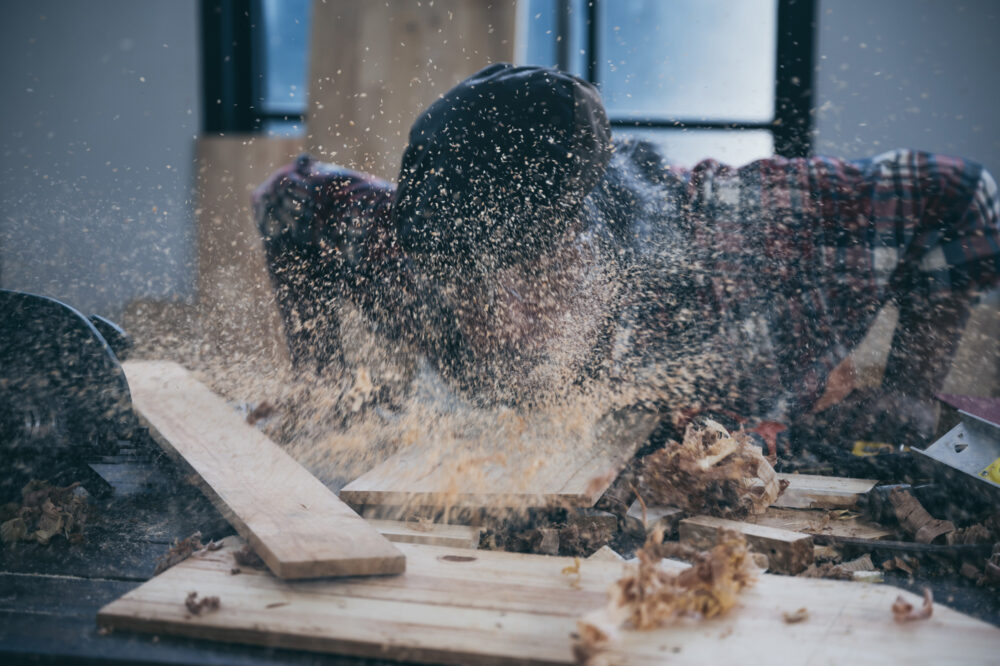
Women and friends alike gravitate toward someone who can shape raw materials with their bare hands and a toolbox. Whether you dive into woodworking, classic car restoration, leathercraft, or simple home repairs, being able to put things together carries undeniable weight.
Knowing how things work proves follow-through. It shows you can start a frustrating project, troubleshoot when parts do not fit, and finish the job. There is an unmistakable charm in being the person who can revive a broken vintage chair instead of throwing it in a dumpster. If you add this to your list of hobbies your appeal will skyrocket.
2. True Outdoor Competence
Hiking, wilderness camping, backpacking, bouldering, and even targeted gardening signal a healthy connection to the natural world.
There is an important distinction here between a casual dabbler and someone with real field knowledge. Renting a kayak once every three years is fine, but knowing how to read a topographic map, pitch a tarp shelter in driving rain, or start a clean fire commands instant respect. It shows grit, situational awareness, and self-reliance. Don’t get it twisted you don’t need to be Bear Grylls light to fall into this category. Simple enjoying being in nature is enough to get your brownie points.
3. Reading, Writing, and Journaling
A man sitting alone with a notebook or an actual book conveys a calm, grounded energy. These solitary pursuits reflect patience, emotional self-awareness, and focus, three traits that are increasingly rare today.
Being widely read makes your conversational reservoir infinitely deeper. When you journal, you process your thoughts before speaking them out loud. It shows that you have an inner life, which makes your perspective far more compelling than someone whose entire worldview comes from an endless algorithmic social media feed.
4. Cooking and Culinary Hobbies
Knowing your way around a kitchen is one of the highest-yield skills you can develop. It shows hospitality, patience, and sensory awareness.
Take cooking seriously, but leave out the pretension. You do not need to turn every weeknight meal into a high-stress audition for a television cooking competition. Focus on mastering five or six standout meals: braising a cut of beef until it falls apart, nailing a balanced homemade pasta sauce, or making sourdough from scratch. Feeding people well without acting like an exhausted prima donna is an elite social skill.
5. Visual Arts and Musical Pursuits
Carrying a pocket sketchbook, shooting street photography on 35mm film, or learning an instrument like the piano or acoustic guitar proves you value beauty for its own sake.
Creative activities reveal that your brain can operate outside of sheer utility and spreadsheets. They also create a natural bridge for connection. If you date or befriend another creative person, you can collaborate, trade perspectives, and learn from one another’s methods.
6. Craft Hobbies That Require Deep Patience
Certain slow crafts demand total, quiet concentration: horology and mechanical watch regulation, fly tying, beekeeping, leather tooling, or even knitting.
The more niche and deliberate the craft, the more intriguing it becomes. It immediately tells observers that you can sit with frustration, respect detail, and delay gratification. In a culture driven by instant dopamine hits, spending six quiet hours assembling delicate components makes you an outlier in the best possible way.
7. Imaginative Strategy and Storytelling Games
Tabletop role-playing games such as Dungeons & Dragons, complex euro-style board games, and plot-heavy strategy games reveal a sharp, flexible mind.
Engaging in these games shows that you do not take yourself too seriously, that you possess a healthy imagination, and that you enjoy collaborative problem-solving. It demonstrates an open, social personality capable of stepping into another world with a group of friends for an evening.
8. Disciplined Physical Movement
Find an active hobby that pulls you out into the physical world: Brazilian jiu-jitsu, road cycling, archery, surfing, or climbing.
Physical disciplines signal self-respect, dedication, and internal control. Martial arts, in particular, project quiet poise. A person who trains regularly to handle high-stress physical resistance rarely feels the need to puff out their chest in social settings. That calm, understated physical confidence speaks volumes.
9. Welcoming, Low-Barrier Hobbies
Some pastimes naturally invite people in, while others isolate you. While obscure solo gaming marathons can leave a partner feeling walled off in the other room, interests like specialty coffee brewing, outdoor photography, plant propagation, or scenic day hikes are inherently communal.
Having pastimes with a low barrier to entry means friends or romantic partners can step into your world without needing five years of technical training just to participate with you.
The most common turn-off when meeting new people is discovering that they have no real personal interests at all. If your entire life revolves around your 9-to-5 job and zoning out in front of streaming television, your social presence will inevitably run flat.
Pick one craft that challenges your hands, one that sharpens your mind, and one that moves your body. Dedicate real time to them, enjoy the process of being terrible at them at first, and let your genuine curiosity do the heavy lifting.
What pursuits do you think belong on this list? Drop your thoughts in the comments, and stay tuned for our companion piece covering the recreational habits people quietly consider a major turn-off.